
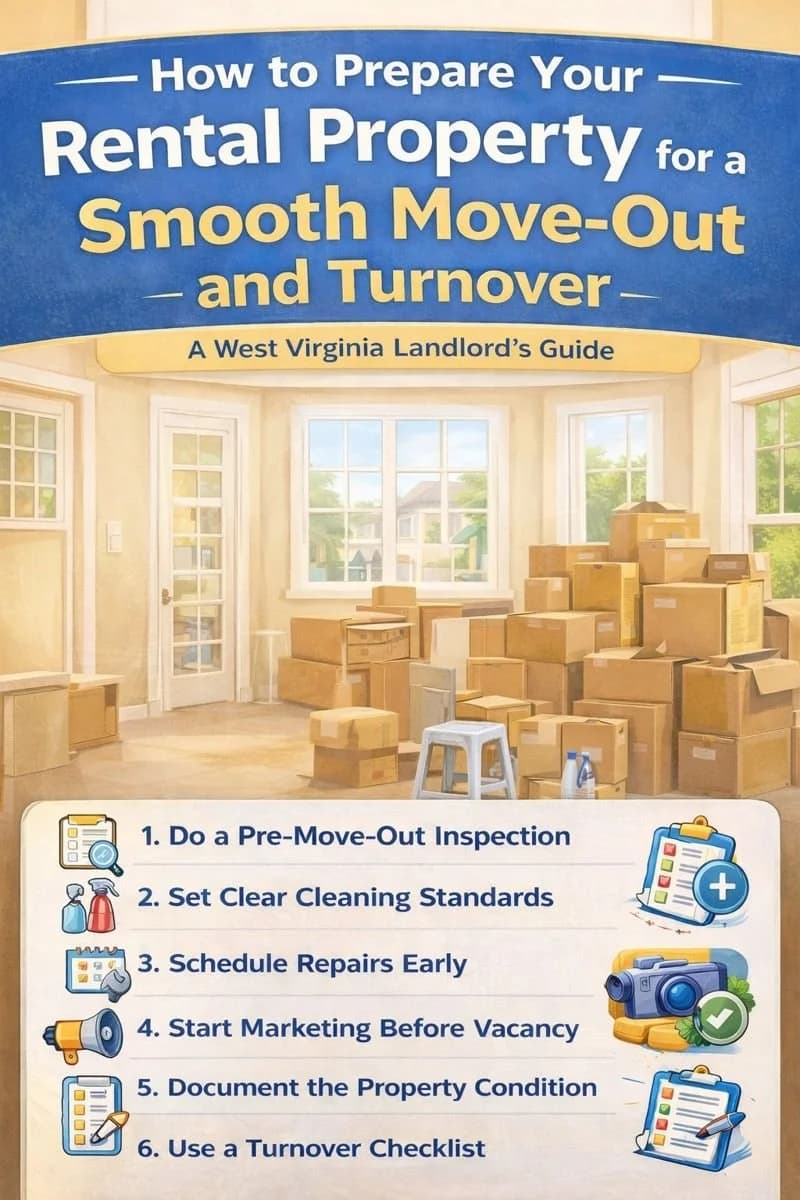
Why turnover is one of the most expensive moments in rental ownership.
Move-outs are where profits are either protected or quietly lost. Even strong rental properties underperform when turnovers are handled poorly. Extended vacancy, rushed repairs, security-deposit disputes, and delayed marketing all compound during a short but critical window.
In West Virginia markets like Charleston, where much of the housing stock is older and demand fluctuates seasonally, turnover efficiency matters even more. A well-managed turnover means a few vacant days. A poorly managed one means a few vacant months.
The key is preparation. Turnovers should never be reactive — they should follow a repeatable, documented process.
Turnover begins before the tenant moves out.
One of the biggest mistakes landlords make is waiting until keys are returned to think about turnover. By then, time is already lost. Preparation begins as soon as notice is given. Confirming move-out dates, explaining expectations, and scheduling inspections early prevents confusion and delays.
Tenants who understand what is expected of them are more likely to leave the unit in good condition. Tenants who feel surprised at move-out often become defensive or dispute charges.
Pre-move-out inspections: preventing surprises.
Pre-move-out inspections are one of the most underutilized tools landlords have. Conducted a few weeks before move-out, these inspections let landlords identify issues while the tenant still has time to address them. This step reduces:
- Security-deposit disputes
- Excessive cleaning costs
- Delays between tenants
Tenants appreciate knowing where they stand, and landlords benefit from fewer surprises after vacancy begins.
Set clear cleaning and condition standards.
Many move-out conflicts stem from different definitions of "clean" or "undamaged." Written standards eliminate ambiguity. They should describe required cleaning level, appliance condition expectations, flooring and wall condition, and trash removal requirements. Providing written standards ahead of time reduces emotional responses and supports fair deposit deductions.
Security deposits: documentation is everything.
Security-deposit disputes are among the most contentious issues landlords face. In West Virginia, proper documentation is essential. Before move-in, condition should be documented thoroughly. At move-out, that documentation becomes the baseline for comparison. Photos, inspection notes, and invoices create transparency. Poor documentation turns even reasonable deductions into arguments.
Schedule repairs before vacancy begins.
Every day a unit sits vacant waiting for repairs is lost income. Smart landlords schedule vendors in advance whenever possible. As soon as notice is given, identify likely repair needs, schedule vendors tentatively, and order materials early. This proactive approach shortens vacancy and prevents contractor delays during peak seasons.
Refresh vs. renovate: know the difference.
Not every turnover requires upgrades. A refresh may include paint touch-ups, deep cleaning, and minor repairs. Renovations involve flooring replacement, fixture upgrades, or layout changes. The decision should be based on market demand, property condition, and long-term strategy — not frustration with the previous tenant.
Marketing should start before the unit is vacant.
One of the most effective ways to reduce vacancy is to begin marketing before the tenant moves out. Listings can go live while the unit is still occupied, with showings scheduled strategically. Landlords who wait until the unit is empty often lose valuable time. Effective marketing strategies — especially those beyond a single platform — are covered in Marketing Rental Properties Beyond Zillow in West Virginia.
Timing matters more than most landlords realize.
Spring and summer generally see higher demand; winter turnover often takes longer. Factor seasonality into pricing and expectations. A slightly lower rent filled quickly often outperforms a higher rent that sits vacant.
How poor turnovers increase long-term costs.
Inefficient turnovers create ripple effects: extended vacancy, rushed tenant screening, deferred maintenance, and increased wear and tear. These costs accumulate quietly and are often misattributed to "bad tenants" rather than poor processes. Many of these losses fall into the hidden costs every landlord should budget for.
Tenant screening still matters — even during turnover pressure.
Vacancy pressure tempts landlords to rush approvals. Filling a unit quickly with the wrong tenant often leads to early lease termination, property damage, or nonpayment. A few extra days of vacancy is almost always cheaper than months of stress.
Use checklists to eliminate missed steps.
The most reliable way to improve turnover outcomes is standardization. A strong turnover checklist includes:
- Notice confirmation
- Pre-move-out inspection
- Vendor scheduling
- Marketing launch
- Final inspection
- Deposit accounting
Why professional property managers excel at turnovers.
Property managers handle turnovers continuously. They already have vendor relationships, inspection systems, and marketing pipelines in place — reducing vacancy, controlling repair costs, maintaining consistency, and avoiding disputes. For landlords managing multiple properties or older housing stock, professional management often pays for itself during turnovers alone.
Final thoughts.
Move-outs are inevitable. Poor turnovers are not. Landlords who prepare early, communicate clearly, document thoroughly, and market strategically protect their income and reputation. In West Virginia's competitive rental market, turnover efficiency is one of the strongest predictors of long-term success.